Health and Safety Policy for Flat Clearance Bermondsey
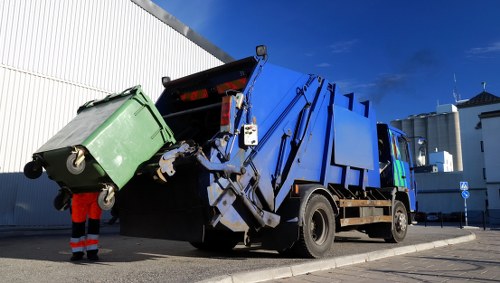 Purpose: This Health and Safety policy sets out the commitment of the flat clearance operation to provide a safe working environment for all staff, contractors and members of the public affected by our flat and rubbish clearance activities. It applies across the company's rubbish removal service area and covers clearance services in Bermondsey, nearby waste removal locations and other service zones where household and commercial waste is handled. The policy is intended to be proportionate to the nature of the risks associated with clearance and waste removal tasks and to meet general legal obligations and best practice standards.
Responsibilities and Management
Senior management retains overall responsibility for health and safety. Managers and supervisors will implement safe systems of work for each rubbish collection area and ensure teams are competent to perform clearance tasks safely. All employees must follow safe working procedures, report hazards and participate in training. Contractors and subcontractors engaged for clearance projects must demonstrate equivalent standards before commencing work.
Risk Assessment and Control Measures
Risk assessments are carried out for each type of flat clearance, waste removal and bulky item collection. Where specific site risks are identified, documented control measures will be put in place to reduce risk to an acceptable level. These controls will include, but are not limited to:- Safe manual handling techniques and mechanical aids for heavy items
- Segregation of hazardous materials and safe containment for sharp or contaminated waste
- Vehicle-safe loading practices and traffic management for collection points
Personal protective equipment (PPE) is provided where residual risk exists after controls. Staff must wear appropriate PPE including gloves, high-visibility clothing, sturdy footwear and respiratory protection where dust or airborne contaminants are present. The rubbish collection area supervisor is responsible for issuing, maintaining and replacing PPE.
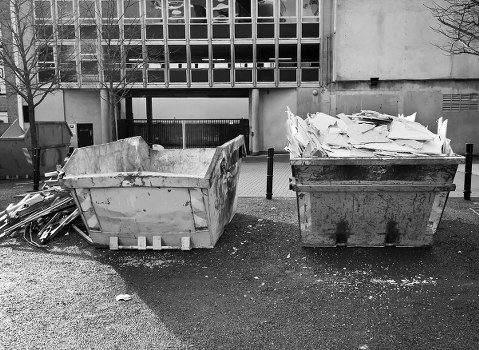 Training competence and supervision: Induction training covers company policy, common hazards in flat clearance and safe systems of work. Ongoing training addresses manual handling, hazardous waste identification, vehicle safety, and use of mechanical lifting aids. Supervisors will monitor compliance and provide refresher briefings for teams working in the service area. Employees are encouraged to raise safety concerns through established reporting procedures.
Safe Work Procedures
The company maintains written procedures for typical clearance activities, including room-by-room clearance, stairway operations, balcony and loft removals, and bulky furniture disposal. Procedures address: task planning, use of trolleys and hoists, permitted two-person and team lifts, and secure loading. For specialist waste such as asbestos-containing materials, solvents, batteries or chemicals, work will cease and competent hazardous waste handlers will be engaged. These measures ensure waste-handling operations meet safety expectations across the rubbish removal service area.Vehicles and plant safety: Company vehicles and plant used in clearance operations are subject to a planned maintenance and inspection regime. Drivers must ensure load security, perform pre-start checks and follow safe driving practices during errands across the rubbish removal zones. Vehicle safety protocols include reversing aids, clear signage and appropriate segregation of pedestrian and vehicle movement at collection points.
Incident reporting and investigation
All accidents, near-misses and unsafe conditions must be reported promptly. The company will investigate incidents to identify root causes and implement corrective actions. Records of accidents and remedial measures will be maintained to inform continuous improvement. Where required by law, statutory reporting will be followed without delay. Lessons learned from incidents are shared with staff to prevent recurrence and strengthen safety culture across the clearance services. Monitoring, review and continuous improvement: Health and Safety performance is monitored through site inspections, toolbox talks and safety audits. Key indicators such as incident frequency, near-miss reports and training completion rates will be reviewed regularly by management. This policy will be reviewed at least annually or following significant change to operations, equipment or regulation. Managers will ensure updates are communicated to all personnel involved in flat clearance, rubbish collection and waste removal activities.
Commitment: The organisation is committed to reducing workplace risk and safeguarding employees, contractors and the public. By following this policy and the associated procedures, the flat clearance team will provide safe, reliable and compliant clearance and rubbish removal services within the designated service area. Everyone has a responsibility to work safely and to cooperate with management in fulfilling this policy.
Policy implementation: This document forms the framework for daily operations. Specific operational documents (risk assessments, method statements and vehicle checklists) complement this policy to ensure practical adherence across all clearance locations used by the company. Management will ensure suitable resources are allocated to achieve the policy objectives and maintain safe, lawful clearance operations within the rubbish company service area and associated waste removal activities.